

Attachment Style
and the way it can decode you and your partner's behaviors

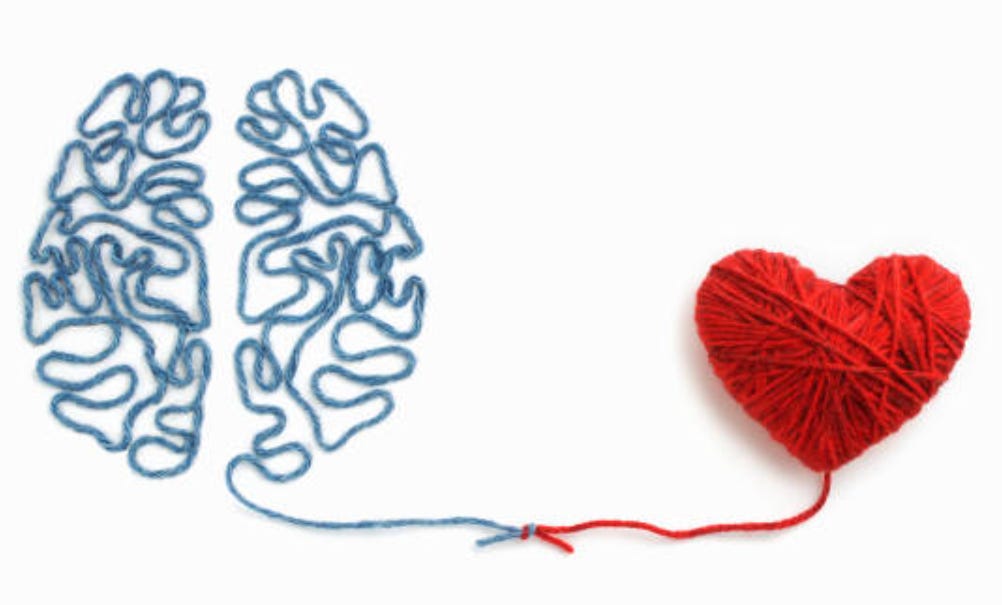
If you are interested in relationships, or have been in therapy at any point in your life, you have likely learned about Attachment Theory. Understanding your attachment style (and your partner’s) has tremendous relationship benefits; It can help you both engage in healthier patterns of behavior AND work towards a more secure relationship over time.
As a couples therapist, it is one of the first things I’m assessing for in the couples dynamic. Understanding each of my client’s attachment styles helps me (and ultimately, them) understand why they are behaving and reacting to certain triggers. Maybe even more importantly, the combination of the couple’s attachment style gives me an enormous amount of information about their conflicts and the ‘why’ behind them.
For those of you aren’t familiar with the theory - fear not! Here is a (brief) history and explanation to get you up to speed:
Developed in the 1940s by John Bowlby and Mary Ainsworth, their research began by studying children’s distress when separated from their mothers and their reactions after being reunited with them. Ainsworth, then identified the three “attachment styles" which are the three ways in which people act in relationships: Secure, Anxious and Avoidant. The theory posits that the early parent-child bond is vital for a child’s emotional and psychological wellbeing and the quality of the relationship deeply influences the future of their interpersonal relationships and development.1
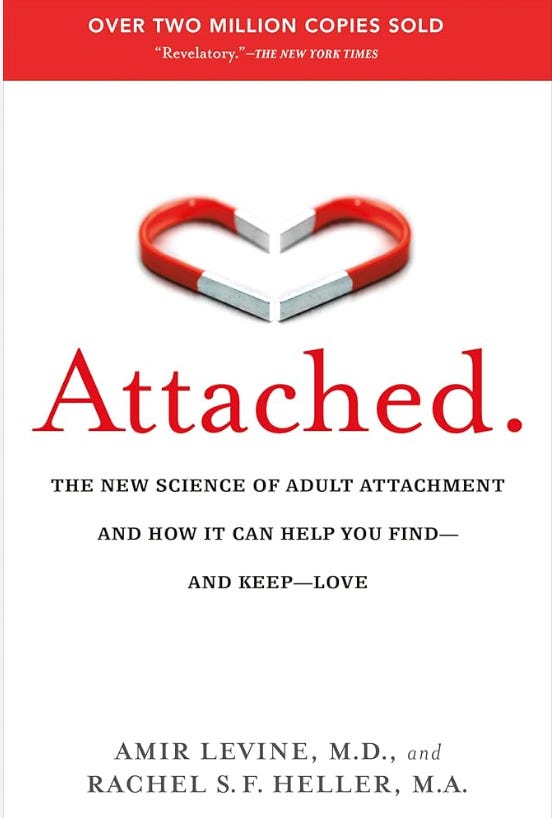
One of my favorite books on Attachment Theory is Attached, by Amir Levine and Rachel Heller. It is a very easy to read, digestable approach to attachment theory, specifically through the lens of romantic relationships.
So, the most pressing question - How do I know what attachment style I am? How do I know what my partner is? Here is a little snippet about each… see what resonates (adapted from Attached);
Secure: People with this style are comfortable with closeness, independence, and direct communication.
Clear communication: Asking directly for needs to be met without guilt (“I’d love to see you more during the week”).
Reliability: Following through on promises and being emotionally consistent.
Comfort with intimacy: Enjoying closeness without being overwhelmed.
Conflict resolution: Addressing disagreements calmly and constructively.
Reassurance without judgment: Comforting their partner if they feel insecure (“I’m here for you, you don’t need to worry”).
Balance: Able to give space when needed but also step in with support.
Positive view of relationships: Believing closeness is healthy and desirable.
Avoidant: People with this style value independence and often feel uncomfortable with too much intimacy or ‘suffocated’ by increased commitment.
Mixed signals: Saying “I love you” but acting cold or detached.
Idealizing past partners or keeping “backup” relationships in mind.
Devaluing current partners: Finding small faults to justify emotional distance.
Pulling away after closeness: Becoming distant after an intimate weekend or deep talk.
Avoiding dependency: Insisting on doing everything alone (“I don’t need anyone’s help”).
Keeping emotional walls up: Talking about the future vaguely, not making clear plans.
Discomfort with commitment: Preferring casual or undefined relationships.
Anxious: People with this style seek closeness but fear rejection or abandonment.
Constant checking: Repeatedly texting/calling if their partner doesn’t respond quickly.
Over-analyzing signals: Worrying if a message seemed “cold” or if a partner took too long to reply.
Protest behaviors (to get attention or reassurance):
Withdrawing or ignoring calls/messages to provoke a reaction.
Threatening to leave the relationship (but not wanting to).
Clinginess: Wanting to spend all free time together.
Difficulty calming down: Staying preoccupied until they get reassurance from their partner.
Now, you likely identify with one of these styles or recognize behaviors from these lists. It is common to operate in one attachment style when you are calm and feeling at peace, and then when you are threatened or scared emotionally, you revert to another style when “under threat.” (This may explain why you or your partner changes their behavior during a conflict or in the aftermath.)
Very often when people recognize that they are “Secure” they feel on top of the world and when they recognize that they (or their partner) are Anxious or Avoidant, they panic. Take a deep breath! It feels easy to go down a fatalistic relationship spiral. It is also easy to go down the parent blaming rabbit hole. First things first: There is fantastic research to show that we can work to change our attachment styles!
Secondly, your attachment style may not have anything to do with your childhood. Traumatic experiences in adulthood, betrayals in relationships can also rewire your attachment style (even if you had wonderful, loving, present parents!) This can come from a lot of different places.
The best thing you can do for yourself and your partner is to learn each of your styles (& habits) and begin to do the beautiful work of rewiring your instincts and behavior, together.
Next week’s newsletter is about Attachment Style Combinations and how they interact! I hope you tune back in! & share with your partner, if you’d like.
Thanks for reading, as always.
with gratitude,
Sasha